10 Essential Tips for Choosing the Right Sports Glove
Choosing the right sports glove can significantly impact your performance. According to the Sports Equipment Association, proper glove selection can enhance grip and reduce injury risk by over 30%. This statistic emphasizes the importance of picking the right gear. Expert Mark Henderson, a sports glove specialist, states, “A well-fitted sports glove is essential for both comfort and control.”
When selecting a sports glove, several factors come into play. The material, fit, and intended use are crucial. Many athletes overlook the importance of these details, resulting in subpar performance. A glove that is too tight can hinder movement, while one too loose may compromise grip. Consider the specific sport you are engaging in. Whether it’s baseball, soccer, or basketball, each sport demands a unique glove design.
Despite the overwhelming options, many athletes find themselves confused. Some choose style over substance, leading to discomfort during play. Understanding the right features can be challenging. Remember, your glove should feel like an extension of your hand. As you navigate the myriad choices in the sports glove market, strive for that perfect fit to enhance your athletic experience.

Understanding Different Types of Sports Gloves and Their Uses
Choosing the right sports glove is crucial for comfort and performance. Different types serve distinct purposes. For instance,
baseball gloves are designed with a larger pocket for catching. They provide excellent grip and flexibility. In contrast,
weightlifting gloves prioritize wrist support and grip. These gloves usually feature padding for comfort during heavy lifts.
Soccer gloves, designed for goalkeepers, offer finger protection and a larger surface area for catching the ball. The grip can vary based on weather conditions.
Some people mistakenly think any glove will do. But the right glove can significantly enhance your game.
Consider your sport’s specific needs.
For training, some gloves may feel too rigid at first. It’s important to give them time to break in. Evaluate how they feel during use.
A glove that feels great off the shelf may not perform well in action. Always think about your unique requirements.
Find a balance between comfort and functionality.
Identifying the Proper Fit for Maximum Comfort and Performance
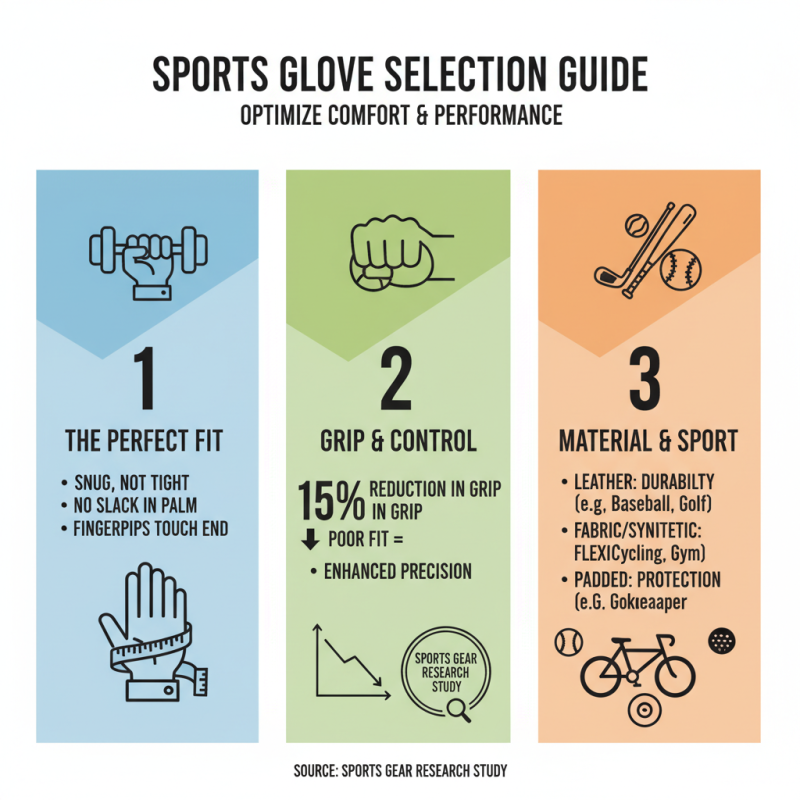
Choosing the right sports glove is crucial for comfort and performance. The fit directly influences how well you can execute movements. According to a recent study by Sports Gear Research, a poor fit can reduce grip strength by 15%. This is significant in activities where precision matters.
An essential tip is to assess your hand size. Measure your hand width and length. Gloves should fit snugly without restricting blood flow. Remember, too loose means reduced control, while too tight can cause discomfort. Many athletes overlook this aspect. A glove that fits properly will enhance overall performance.
Another key point is to consider glove materials. Different sports necessitate varied material choices. For example, leather may be preferred for durability, while synthetic materials can offer better grip. Evaluate your specific needs. Make sure to try on several pairs. Feel the difference—it's all about finding that perfect balance. It might take time, but it’s worth the effort. Comfort and performance can significantly affect your game.
Evaluating Materials for Durability and Grip in Sports Gloves
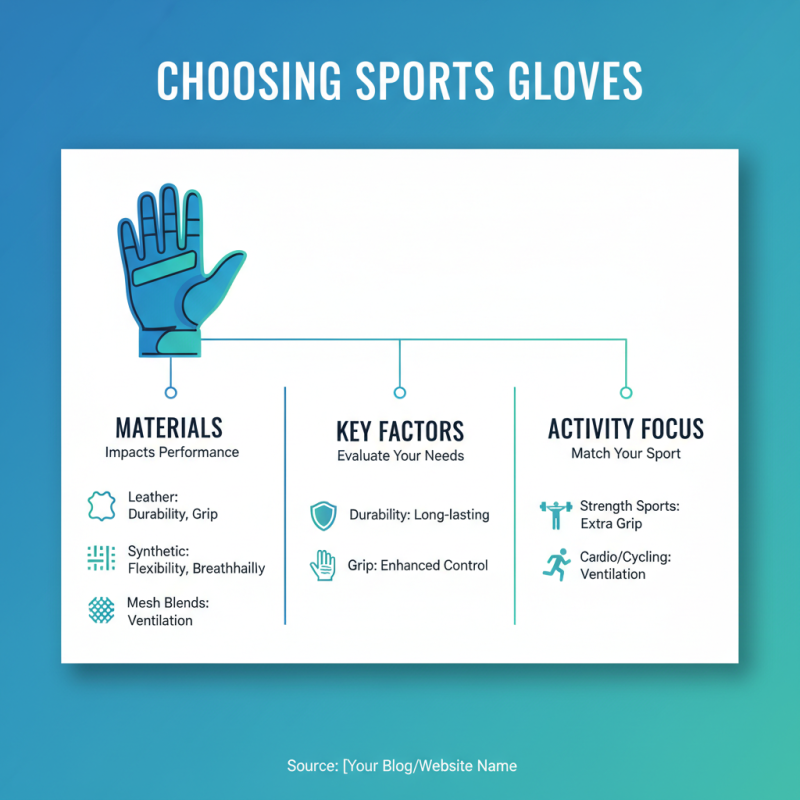
When choosing sports gloves, materials significantly impact performance. You need to evaluate factors like durability and grip. Common materials include leather, synthetic fabrics, and mesh blends. Leather offers excellent longevity but may require more care. Synthetic options provide flexibility and breathability. Think about your sports activities. Do you need extra grip or ventilation?
Grip is essential in activities like climbing or racquet sports. Textured surfaces enhance control, while smooth materials can slip. Check the types of grip patterns available. Some may wear down quickly after a few uses. It’s crucial to consider how they respond to sweat and moisture.
Durability matters as well. A durable glove withstands wear and tear. However, durability can come at the cost of comfort. You might find strong materials feel stiff. Always try on gloves, and move your hands. If something feels off, reflect on that choice. Don’t rush the decision; a little observation goes a long way.
Considering Weather Conditions and Their Impact on Glove Selection
When choosing sports gloves, weather conditions play a crucial role. Cold weather can make your hands numb. In such cases, insulated gloves are essential. They keep warmth and improve grip. Conversely, hot and humid climates require breathable materials. Look for gloves made of lightweight, moisture-wicking fabrics. This prevents your hands from sweating too much.
Stay aware of the precipitation level. Rainy days call for waterproof gloves. These help maintain grip and protect your hands. On the other hand, snowy conditions may need gloves with added insulation. However, too much insulation can lead to decreased dexterity. Balance is key.
Consider the activities you engage in. If you play sports involving quick movements, flexibility matters. Some gloves may fit snugly but sacrifice comfort. Test them out. Assess fit and comfort, especially when worn for an extended period. Remember, it's okay if you need to return a pair that doesn't feel right. Your hands deserve better.
Budgeting for Quality: Finding the Right Sports Glove Without Overspending
Finding the right sports glove can be challenging. You want quality without breaking the bank. Start by establishing a clear budget. This helps narrow your options. It’s easy to get swept away by enticing features and flashy designs. Yet, the best gloves combine performance with value.
When researching gloves, look for materials that enhance durability and comfort. Check online reviews from real users. These insights can reveal hidden flaws or strengths. Sometimes, a less expensive option performs better than pricier counterparts. Pay attention to fit. A glove that feels good may cost more upfront, but comfort leads to better performance.
Consider looking for sales or outlet stores. You might find high-quality gloves at reduced prices. Don’t rush your decision. Taking time to explore various options may save you money in the long run. Assess your specific needs for the sport you play. Prioritize features that truly matter to you. Balancing quality and cost often requires some reflection and trial and error.
10 Essential Tips for Choosing the Right Sports Glove